


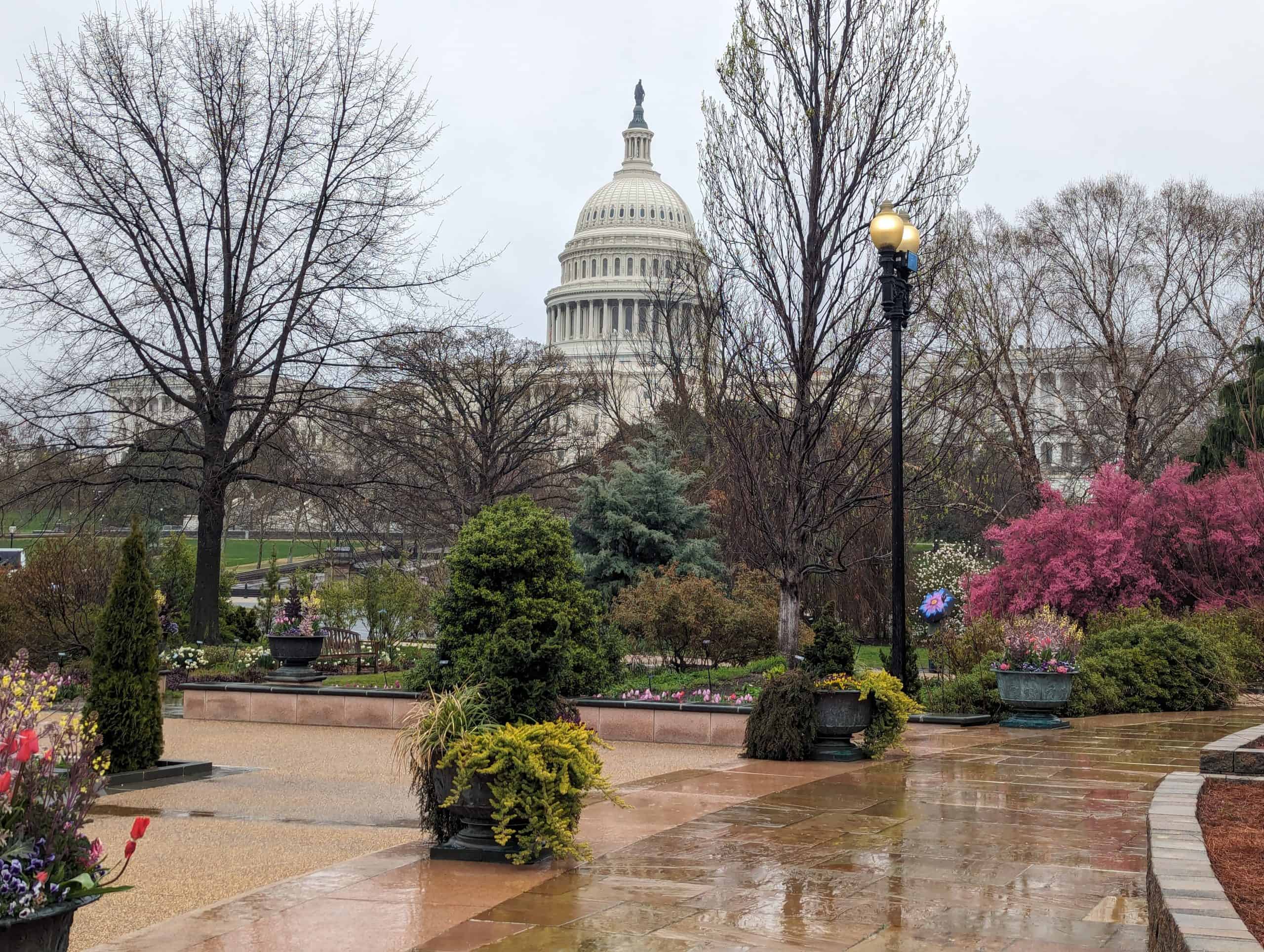
Beyond Cherry Blossoms: The Best Gardens near Washington DC to Visit in Spring

Each year the United States Capital attracts visitors from around the globe to welcome spring and delight over the famed cherry blossoms, a symbol of our nation’s enduring friendship with Japan. But while the cherry trees get most of the attention, there are many other public gardens in and around Washington DC to embrace the season’s vibe.
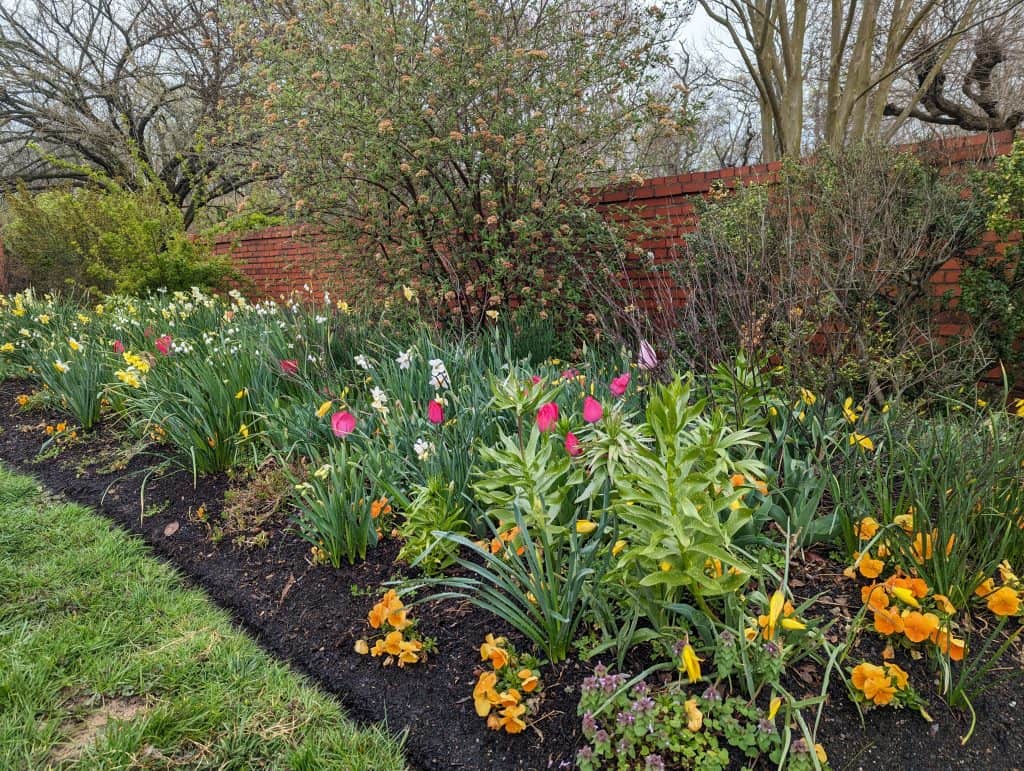
Spring Gardens in Washington DC: Cherry Blossoms & More
Spring in Washington, D.C. is pure magic. As the cherry blossoms reach peak bloom, the city transforms into a dreamy landscape of soft pink and white petals. Whether you’re walking around the Tidal Basin, exploring the National Mall, or finding a quieter spot in East Potomac Park, it’s one of the most breathtaking times to be in the nation’s capital.
The Tidal Basin, the National Mall, and East Potomac Park
For a couple of weeks, typically from late March to early April, the National Cherry Blossom Festival brings even more energy to the city. The festival, which celebrates the 1912 gift of cherry trees from Japan, is packed with parades, performances, kite-flying, and cultural events. But the real star is the blossoms themselves.
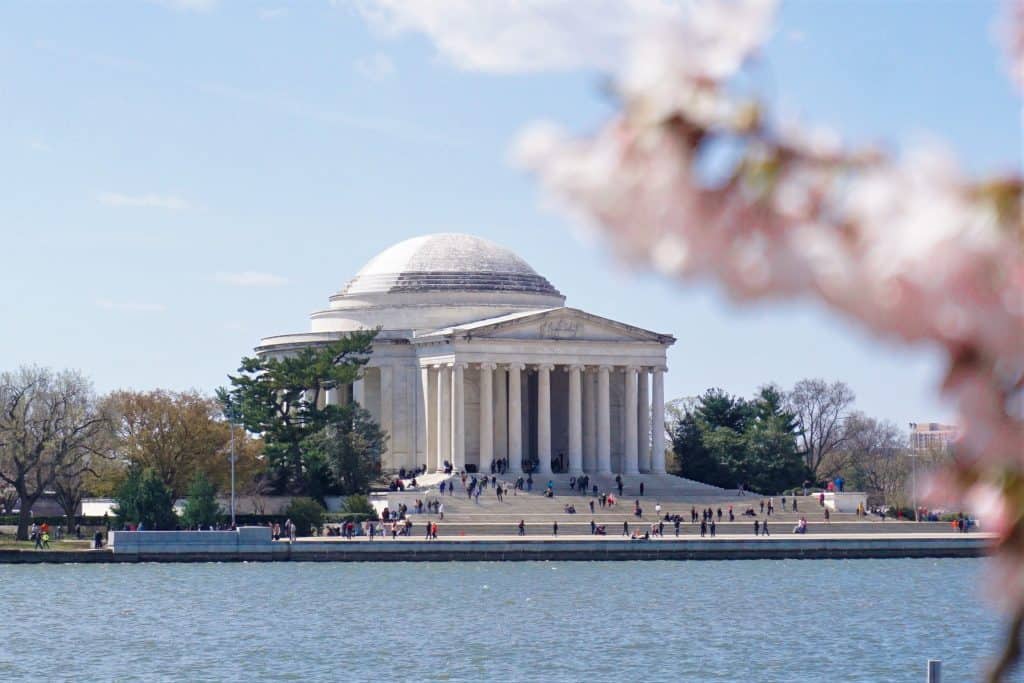
The Tidal Basin is the classic spot to take it all in. The trees here frame the water and create perfect picture views of the Jefferson Memorial, Martin Luther King Jr. Memorial, and Franklin Delano Roosevelt Memorial. It’s busiest during the day, but if you go early in the morning, you’ll catch the sunrise reflecting on the water while petals drift through the air—a moment that feels straight out of a painting.
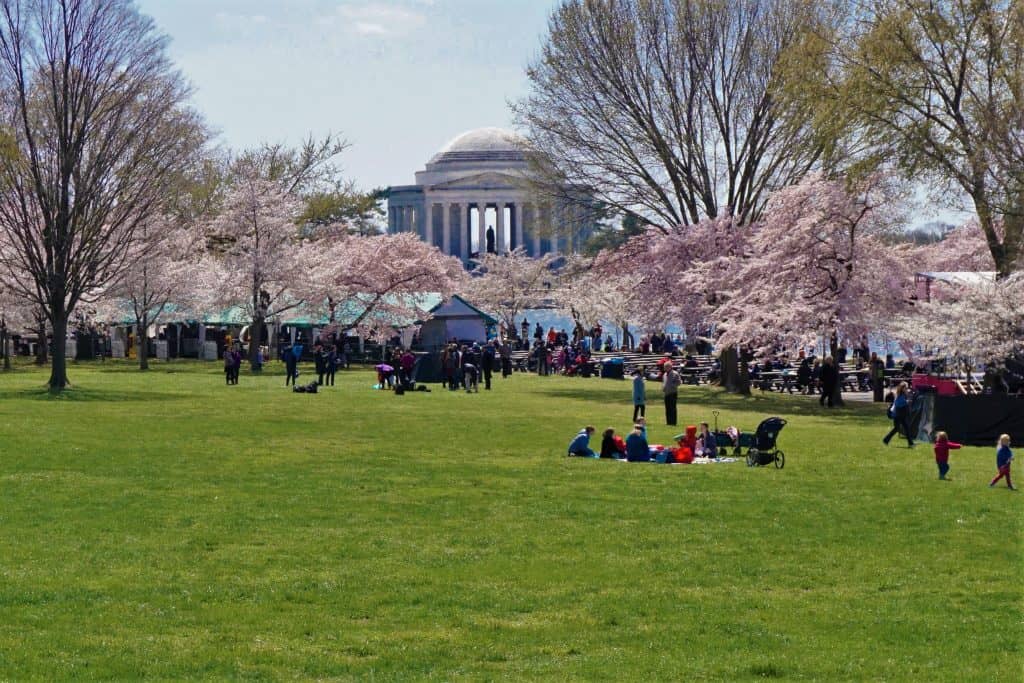
Beyond the Tidal Basin, the National Mall has its share of cherry blossoms, especially around the Washington Monument and along Constitution Avenue. It’s also a great place to sit and soak up the festival atmosphere, with food vendors, street performers, and art installations popping up throughout the season.
If you’re looking for a quieter spot, East Potomac Park is the hidden gem. The trees here bloom slightly later than those around the Tidal Basin, so it’s a great place to extend your cherry blossom experience. The walking and biking trails offer a more relaxed way to enjoy the blooms without the heavy crowds.
The Smithsonian Gardens
Amid the monuments and museums of the National Mall, the garden spaces around the Smithsonian Museums offer a quiet retreat from the city’s hustle—places where history, art, and horticulture blend seamlessly. Though not as famous as the cherry blossoms around the Tidal Basin, in spring, this collection of gardens become some of the most enchanting spots in Washington, D.C.
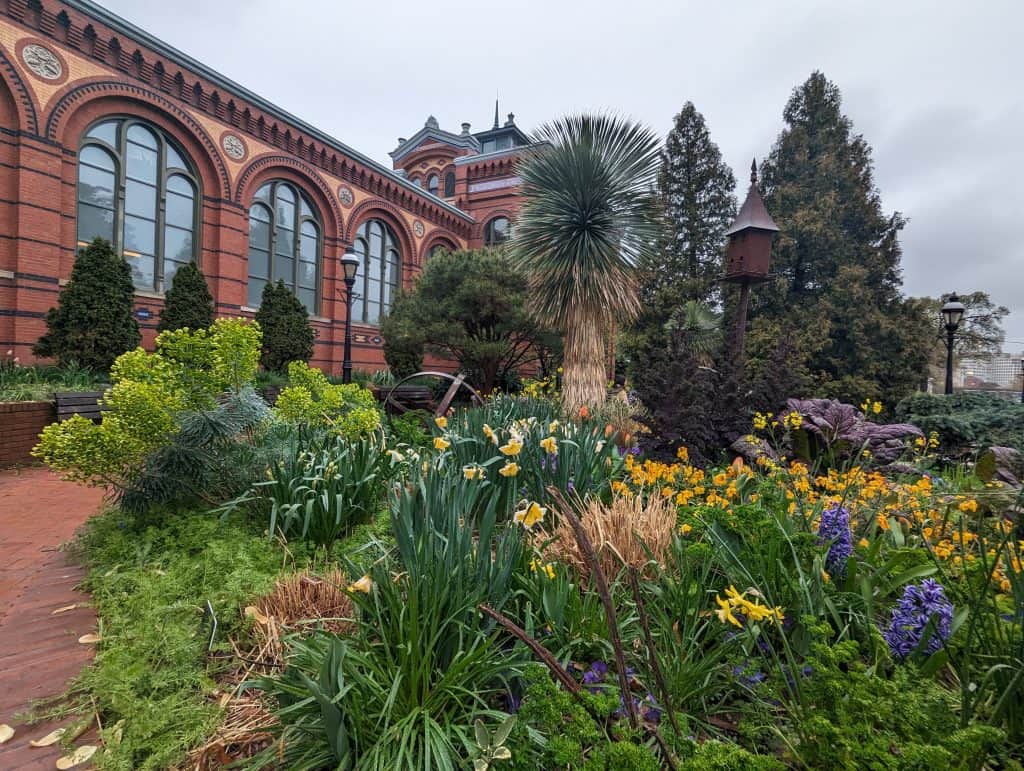
Enid A. Haupt Garden: A Touch of Europe in the US Capital
Tucked behind the Smithsonian Castle, the Enid A. Haupt Garden is like stepping into a hidden sanctuary. With its formal landscaping, brick pathways, and beautifully maintained flower beds, it feels worlds away from the crowds of the Mall just outside its gates.
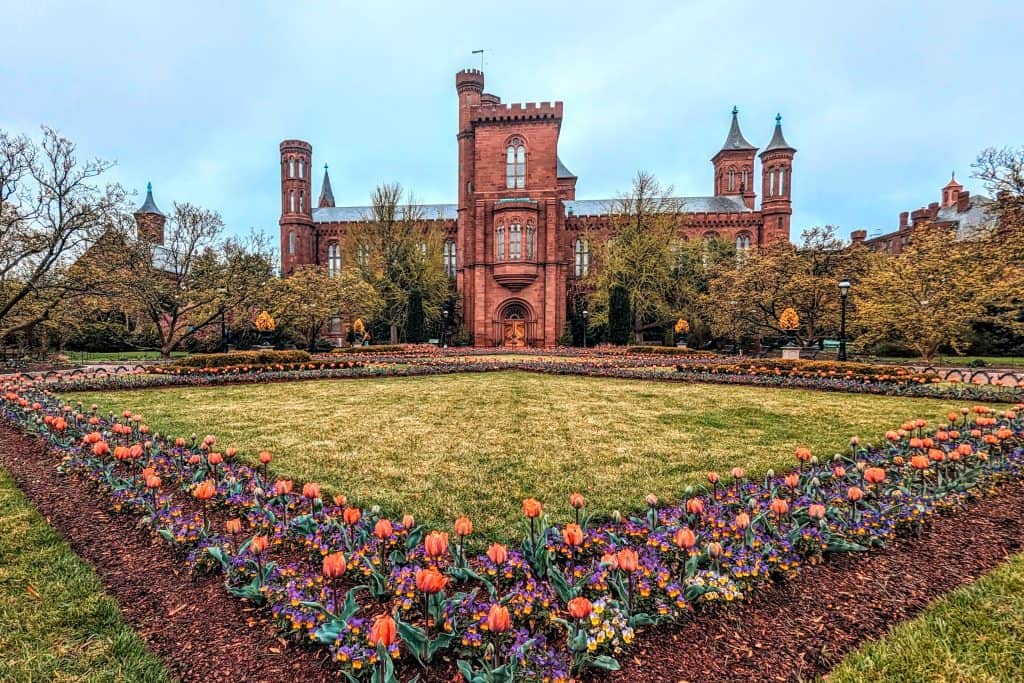
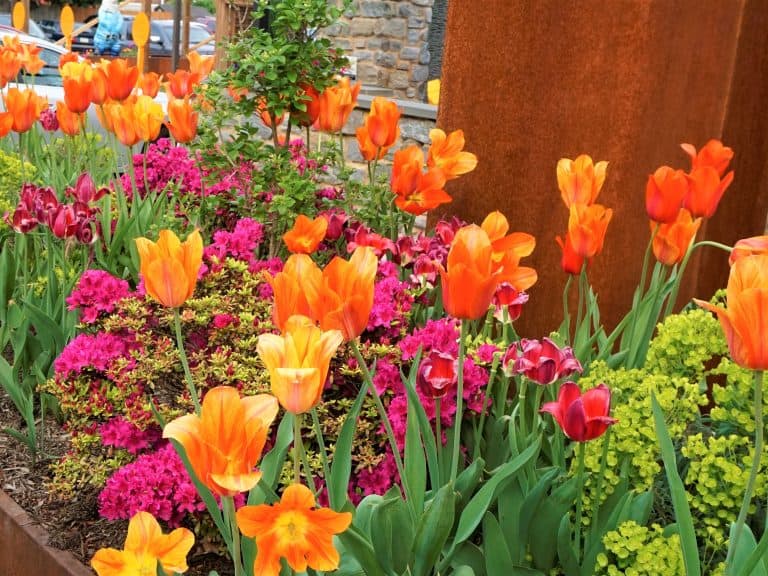
Spring here is a vibrant mix of tulips, magnolias, and ornamental cherry trees, all set against the backdrop of historic architecture. The space is designed as a French-inspired parterre garden, with symmetrical patterns and seasonal plantings that change throughout the year. Beneath your feet, history runs deep—this garden sits atop the National Museum of African Art, the Arthur M. Sackler Gallery, and the S. Dillon Ripley Center, which are all underground.
Benches scattered throughout make it an ideal place to pause, whether you’re taking a break from museum-hopping or just looking for a moment of calm. With the scent of fresh blooms in the air and the Castle’s red sandstone walls providing a striking contrast to the greenery, it’s easily one of the most charming spots in D.C.
The Mary Livingston Ripley Garden: A Botanist’s Dream
A short walk from the Haupt Garden, nestled between the Hirshhorn Museum and the Arts and Industries Building, the Mary Livingston Ripley Garden is a hidden gem bursting with life. Designed as an accessible sensory garden, this space was originally intended to be temporary, but its beauty and uniqueness earned it a permanent place along the Mall.
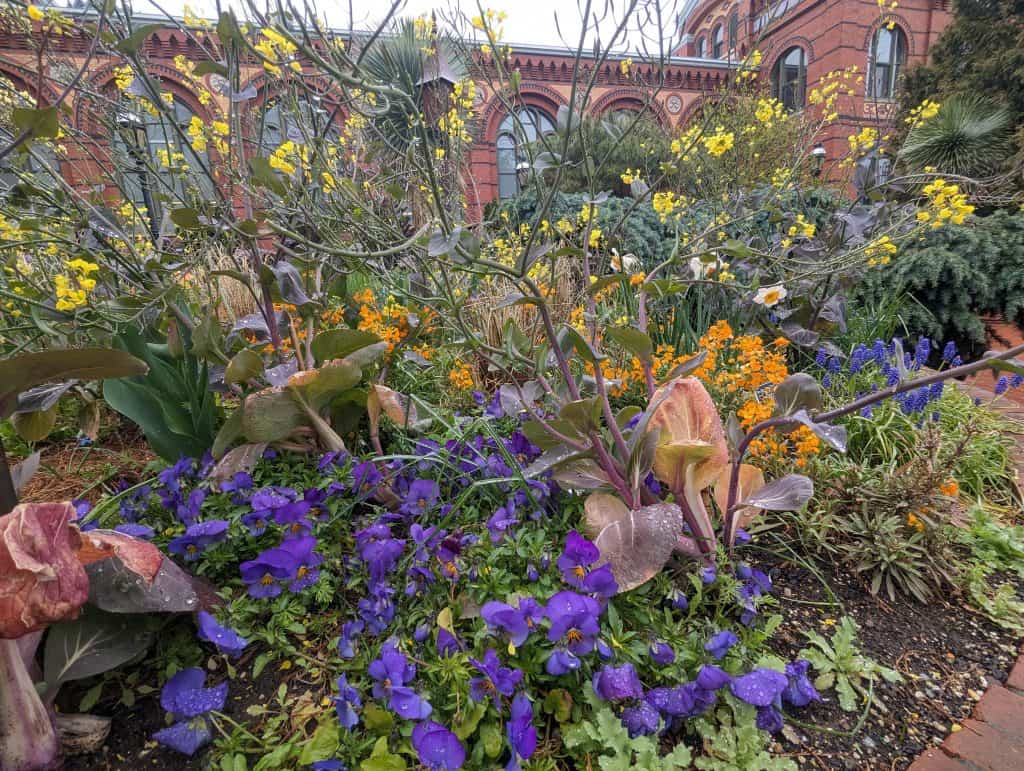
The curved brick pathway winds through a dense collection of rare and unusual plants, making every turn feel like a new discovery. Spring here means cascading wisteria, colorful azaleas, and fragrant herbs, along with seasonal blooms that change from early tulips to late-season perennials.
In contrast to the structured elegance of the Haupt Garden, the Ripley Garden has a lush, almost whimsical feel, with plants spilling over pathways and climbing trellises. It’s a favorite among photographers, plant enthusiasts, and anyone who loves an intimate, garden-like escape in the middle of the city.
The U.S. Botanic Garden
Just steps from the U.S. Capitol, the U.S. Botanic Garden feels like a world apart. Duck in for a quick escape from the city or linger to admire the incredible variety of plants at one of D.C.’s most peaceful and underrated attractions. In spring, the surrounding outdoor gardens wake up with new life, while the glass-enclosed Conservatory offers a lush, tropical retreat—perfect for a rainy day, as I discovered on my own visit last spring.
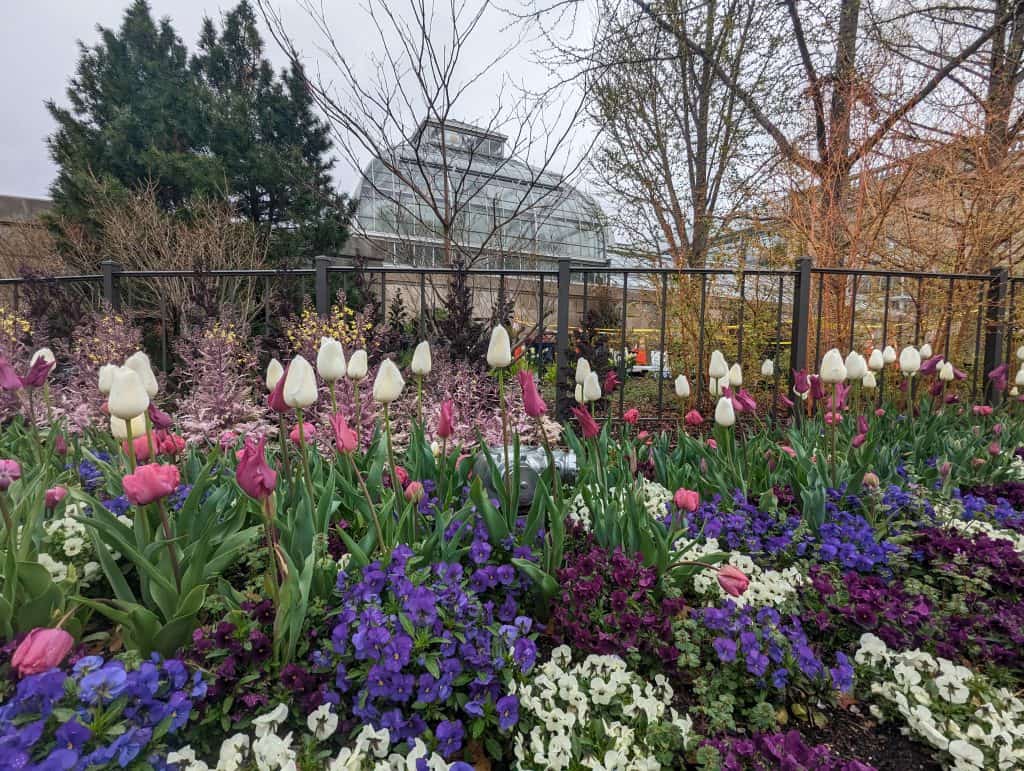
The Conservatory, the centerpiece of this rainforest in the city, is like stepping into another climate. The air is warm and humid, filled with the scent of exotic blooms and damp earth. Towering palms and lush ferns fill the Tropical Rainforest exhibit, where a raised catwalk lets you look down on the canopy from above—one of the best vantage points in the garden.
Beyond the rainforest, different sections of the Conservatory transport you across the world through plants. The Orchid Room is a must-see in spring, filled with delicate, fragrant flowers in an explosion of colors. The Mediterranean Room is another favorite, offering a sunny contrast with its olive trees, lavender, and citrus plants.
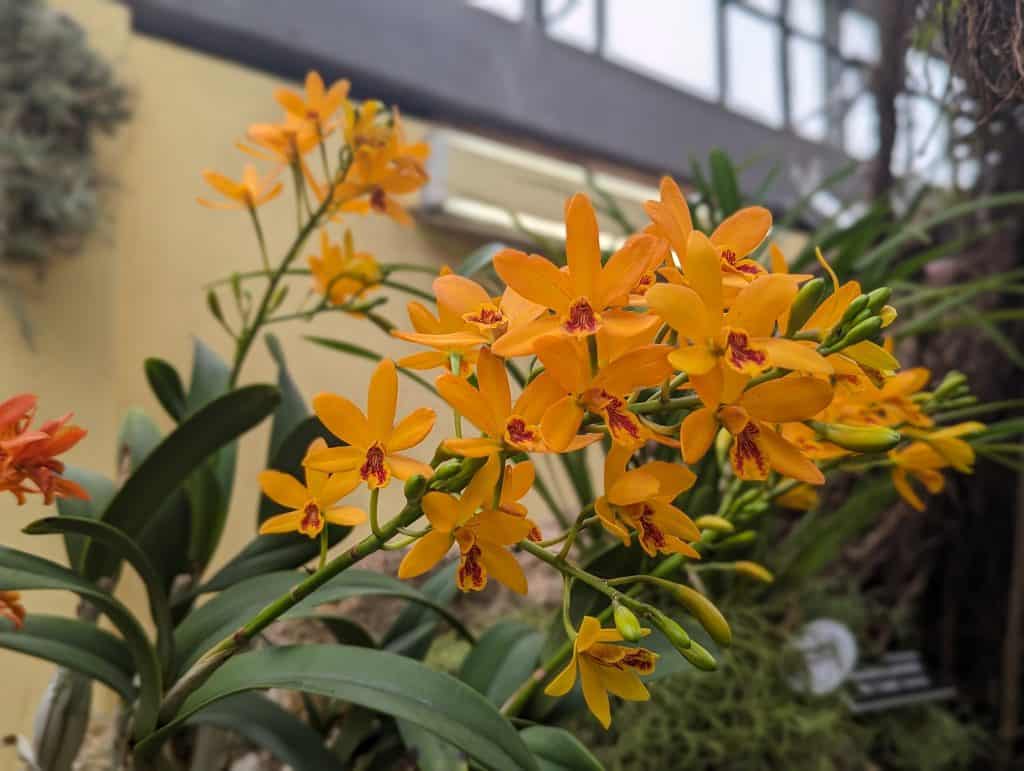
Even on a gray, rainy day, the Conservatory is a vibrant, warm, and welcoming place to explore. While the city outside might be drenched, inside, it’s always spring.
Enjoy a slow wander through the outdoor gardens surrounding the Conservatory. Spring brings tulips, daffodils, and flowering cherry trees to life. The National Garden showcases native plants, roses, and a peaceful fountain courtyard that feels made for lingering.
In late spring, the Butterfly Garden, designed to attract pollinators with colorful wildflowers, is a highlight. The First Ladies Water Garden, a tribute to the contributions of First Ladies throughout history, offers a serene spot with gently flowing water features.
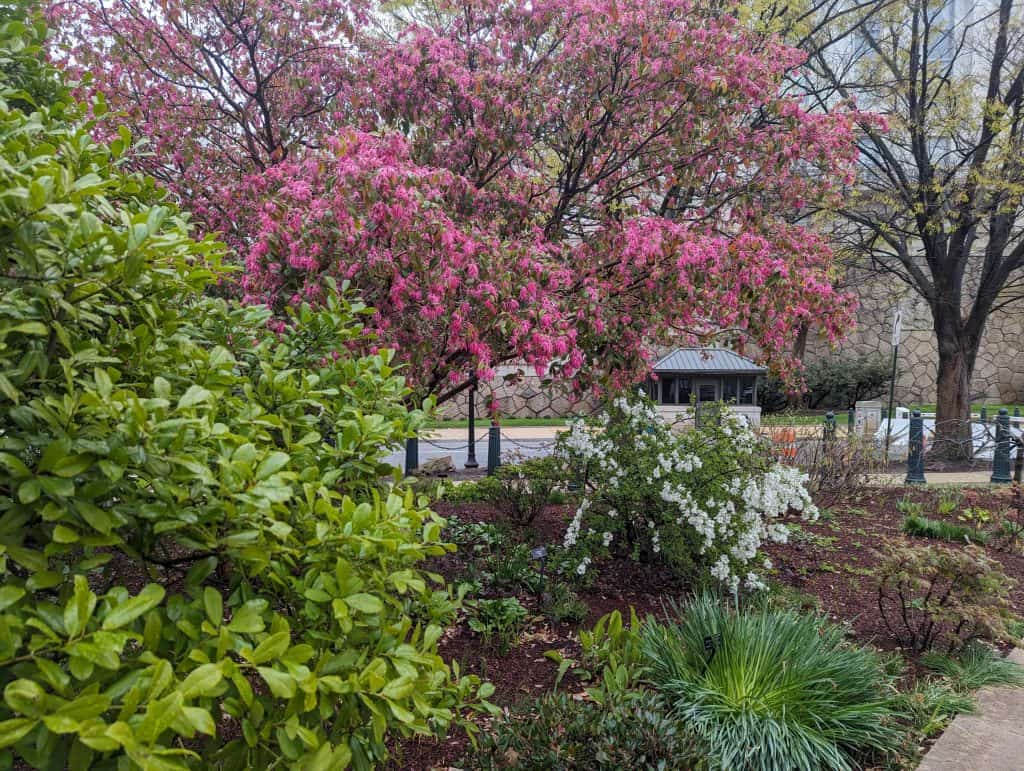
Cross Independence Avenue to explore Bartholdi Park, named after the sculptor of the Statue of Liberty. This quieter, less-visited space with beautifully arranged seasonal plantings makes it the perfect spot to take a moment to sit and soak in the surroundings.
- Address: 100 Maryland Ave SW, Washington DC
- Hours: Daily 10 am -5 pm.
The National Arboretum
Tucked away in Northeast D.C., the U.S. National Arboretum is one of the city’s most stunning but often overlooked green spaces. Spread across 446 acres, it offers a mix of manicured gardens, forested trails, and open meadows—all connected by over eight miles of bike-friendly roads. If you’re looking for a way to explore this vast and diverse landscape, biking is one of the best ways to do it. And in spring, when azaleas, dogwoods, and delicate ephemerals start blooming, the Arboretum becomes one of the most breathtaking places in Washington, D.C.
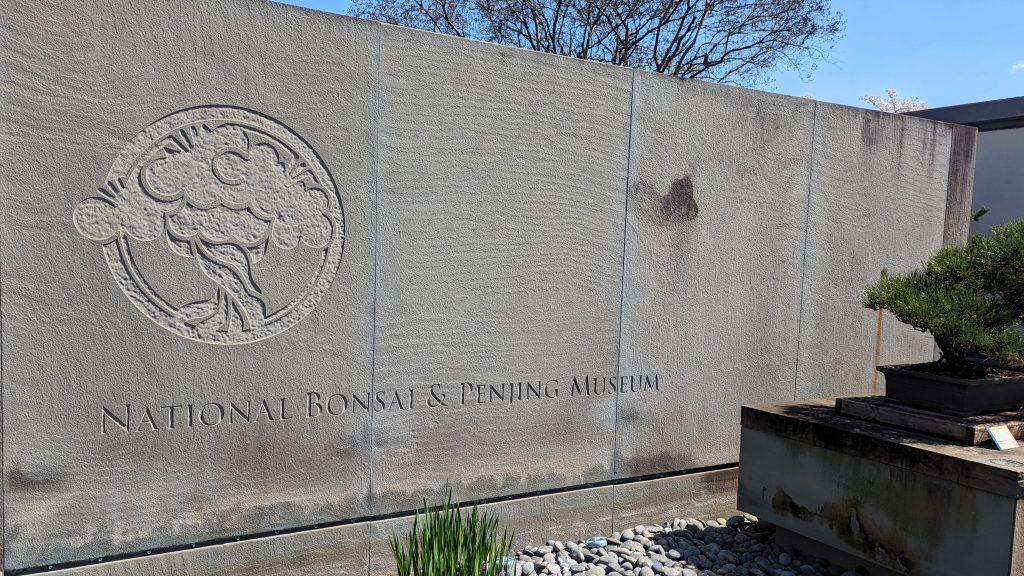
The National Bonsai & Penjing Museum
Spring is an incredible time to visit the National Bonsai & Penjing Museum, where miniature trees, some hundreds of years old, are meticulously shaped into living sculptures. The collection includes Japanese, Chinese, and North American bonsai, along with beautifully landscaped courtyards that feel like stepping into another world. The museum’s cherry and wisteria bonsai often bloom in spring, offering a truly unique way to experience these beloved flowers.
The National Capital Columns
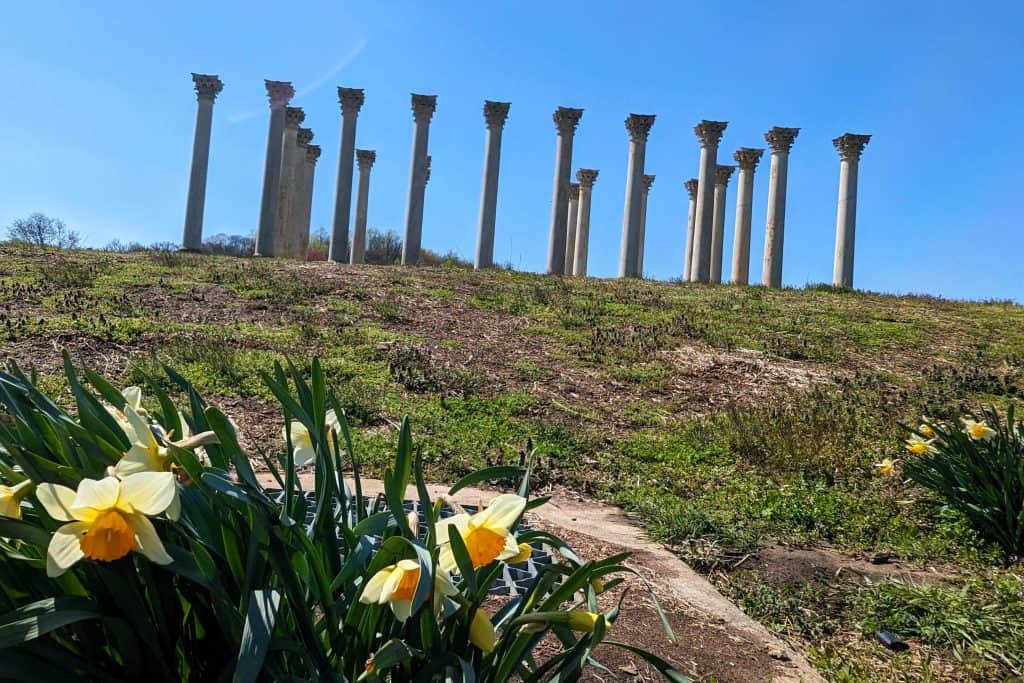
One of the most photographed spots in the Arboretum is the National Capital Columns, a set of 22 sandstone columns that once stood as part of the U.S. Capitol before being relocated here in the 1980s. Standing in an open meadow, surrounded by flowers and rolling green hills, they feel almost surreal—like something out of ancient Rome. In spring daffodils and wildflowers bloom around them, making them even more of a showstopper.
Asian, Azalea, Dogwood & Flowering Tree Collections
Asian Collection
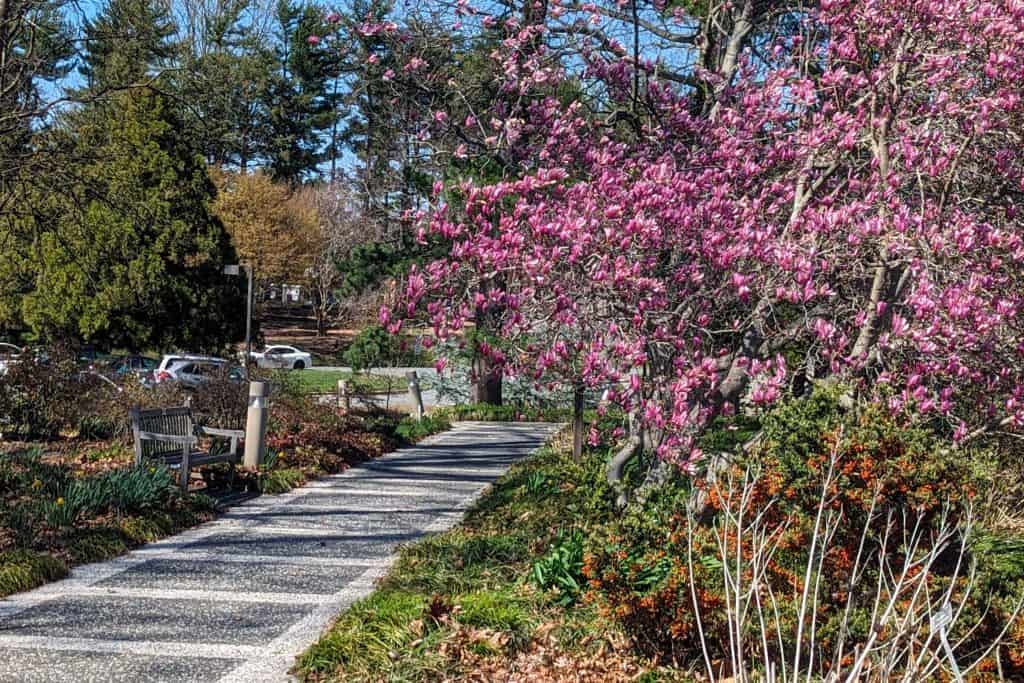
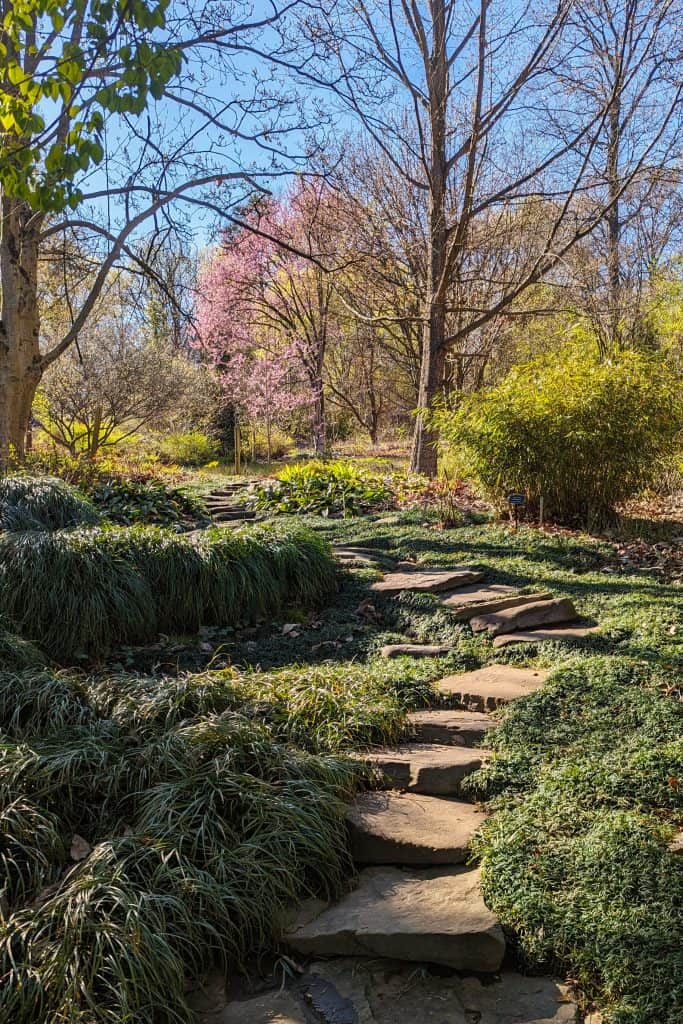
This hillside garden transports you to East Asia with its cherry trees, camellias, and rhododendrons. In spring, the winding paths are lined with flowering magnolias, Japanese maples, and draping wisteria, making it feel like a hidden sanctuary.
Azalea Collection
Late April to early May is peak bloom for the azaleas, and this collection is simply stunning. Covering over 40 acres, the vibrant pinks, purples, and whites cascade down the hillsides, creating one of the best spring displays in the entire city.
Dogwood Collection
Nestled in a quiet area of the Arboretum, the dogwood trees bloom in soft whites, pinks, and even reds, adding delicate color to the landscape. Some varieties are native, while others come from around the world, offering a unique mix of species.
The Flowering Tree Collection
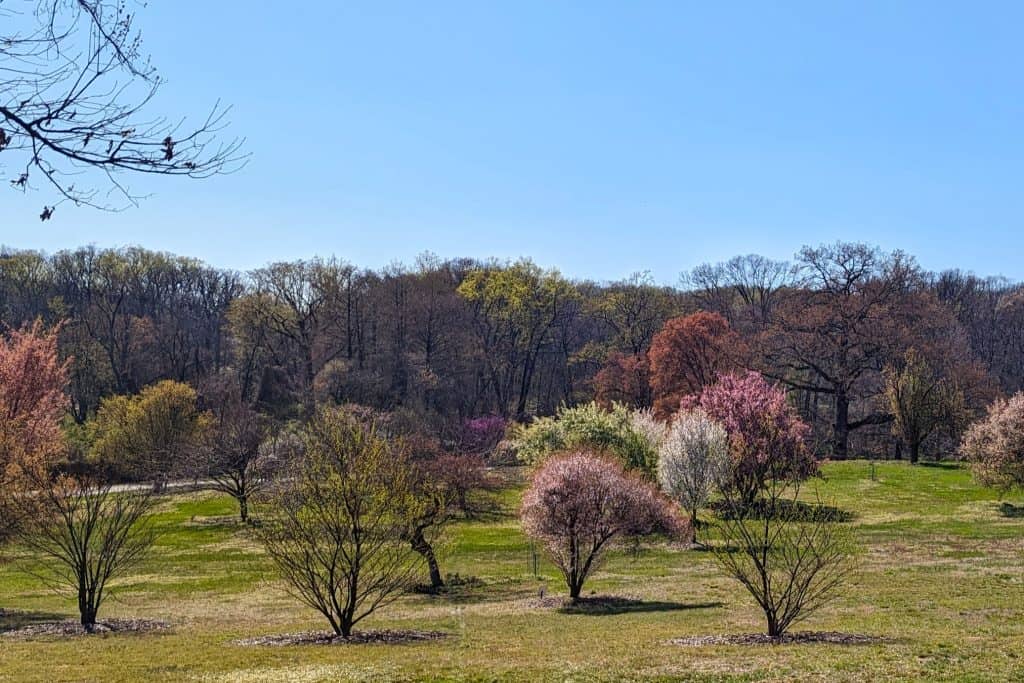
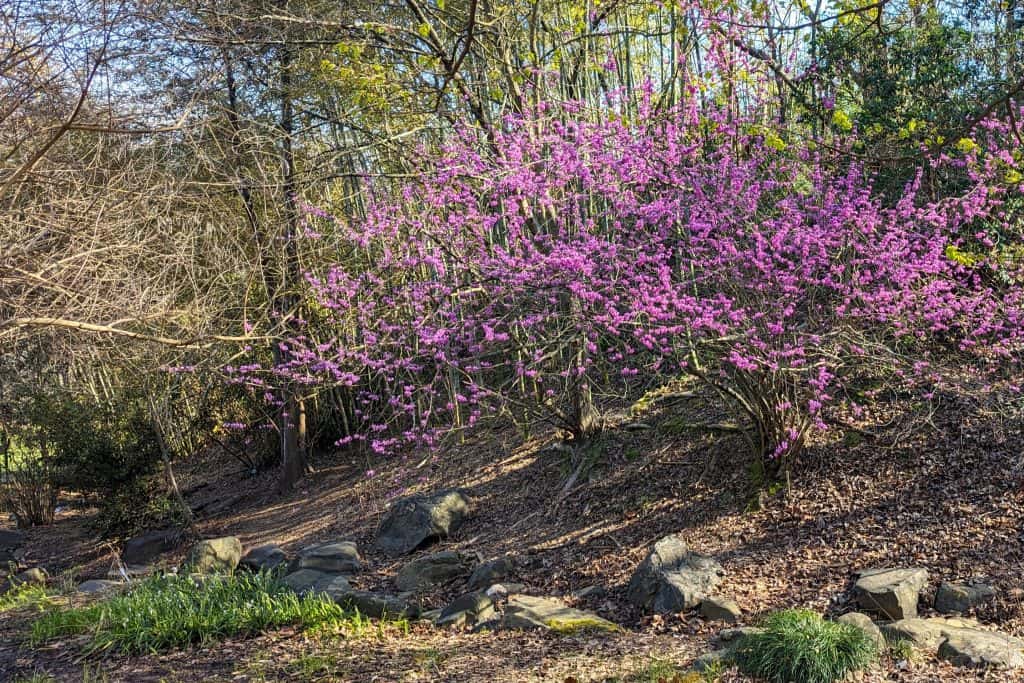
If you’re looking for a quieter place to enjoy cherry blossoms without the crowds of the Tidal Basin, the Flowering Tree Collection at the National Arboretum is the perfect spot. This expansive area showcases over 70 species of ornamental trees, including an impressive selection of cherries, magnolias, redbuds, and crabapples.
In early spring, the Yoshino and Kwanzan cherry trees burst into soft pink and white blooms, creating a serene, petal-filled landscape. The collection also features lesser-known cherry species that bloom at different times, meaning you may still catch blossoms even after peak bloom in other parts of the city.
Fern Valley & the Magic of Spring Ephemerals
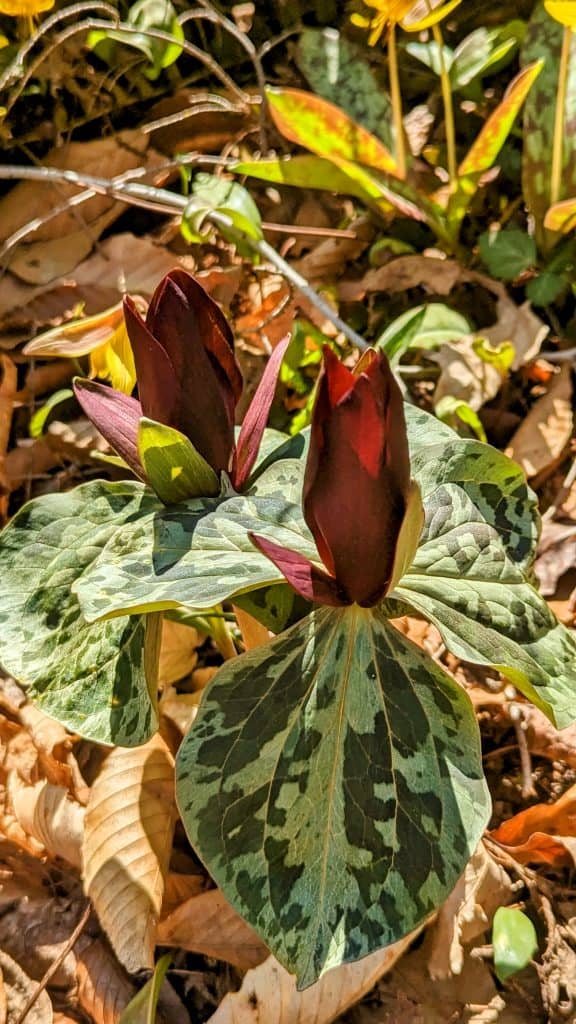
If you love the fleeting beauty of spring ephemerals—those delicate wildflowers that bloom for just a short time before disappearing—Fern Valley is the place to be. This naturalistic woodland area is home to trilliums, bloodroot, Virginia bluebells, and mayapples, all of which bloom in early spring before the trees fully leaf out. The ferns here are lush and vibrant, adding to the secluded, almost mystical feeling.
- Address: 3501 New York Ave NE, DC
- Hours: Daily 8 a.m. to 5 p.m., The National Bonsai & Penjing Museum is open daily from 10 a.m. to 4 p.m
Springtime Gardens in Virginia: A Season of Color and Renewal
As winter fades, Virginia’s gardens come alive with vibrant blooms, fragrant blossoms, and lush greenery, making spring one of the most spectacular times to explore the state’s botanical beauty. From sprawling formal landscapes to hidden woodland retreats, each garden offers a unique way to experience the season. Whether you’re wandering through a tulip-filled farm, admiring cherry blossoms away from the crowds, or exploring historic estates bursting with azaleas and dogwoods, these gardens provide the perfect backdrop for a springtime escape.
River Farm (Alexandria, VA)
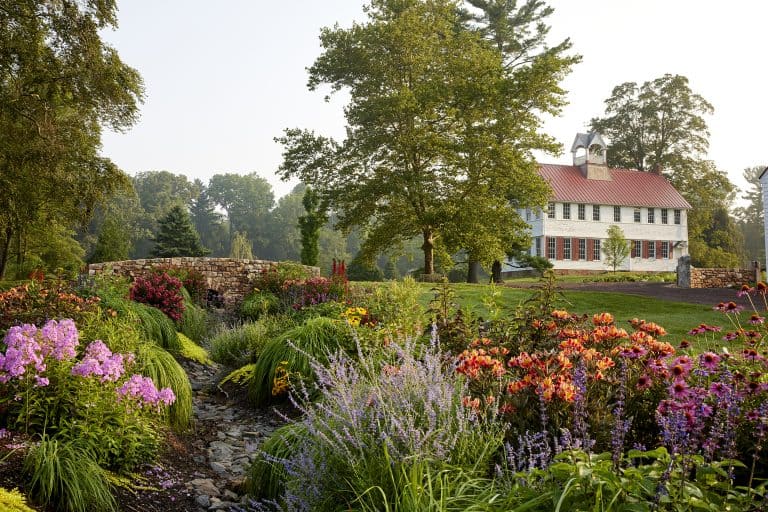
Spring is the perfect time to visit River Farm in Alexandria, VA. As the headquarters of the American Horticultural Society, this 25-acre estate transforms into a colorful oasis, with flowering trees, lush gardens, and riverfront views that feel like a hidden retreat from the nearby bustle of Washington, D.C.
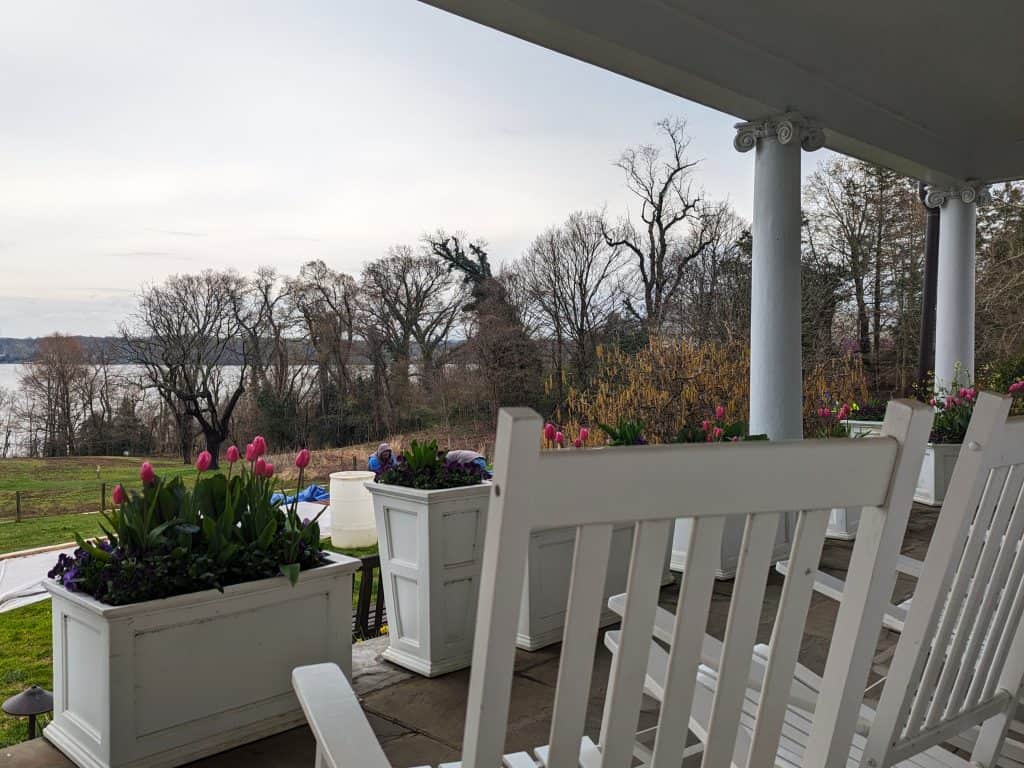
From late March through May, cherry blossoms, dogwoods, and magnolias burst into bloom, while tulips and daffodils add pops of color throughout the gardens. Later in the season, the pollinator beds come to life, buzzing with butterflies and bees, and if you’re into birdwatching, spring migration brings a variety of songbirds to the property.
The mild temperatures make it a perfect time to wander the woodland trails or grab a rocker on the porch to take in the peaceful Potomac River views. Whether you’re exploring the Children’s Garden, strolling through the formal flower beds, or relaxing on the open lawns, spring brings everything into full bloom.
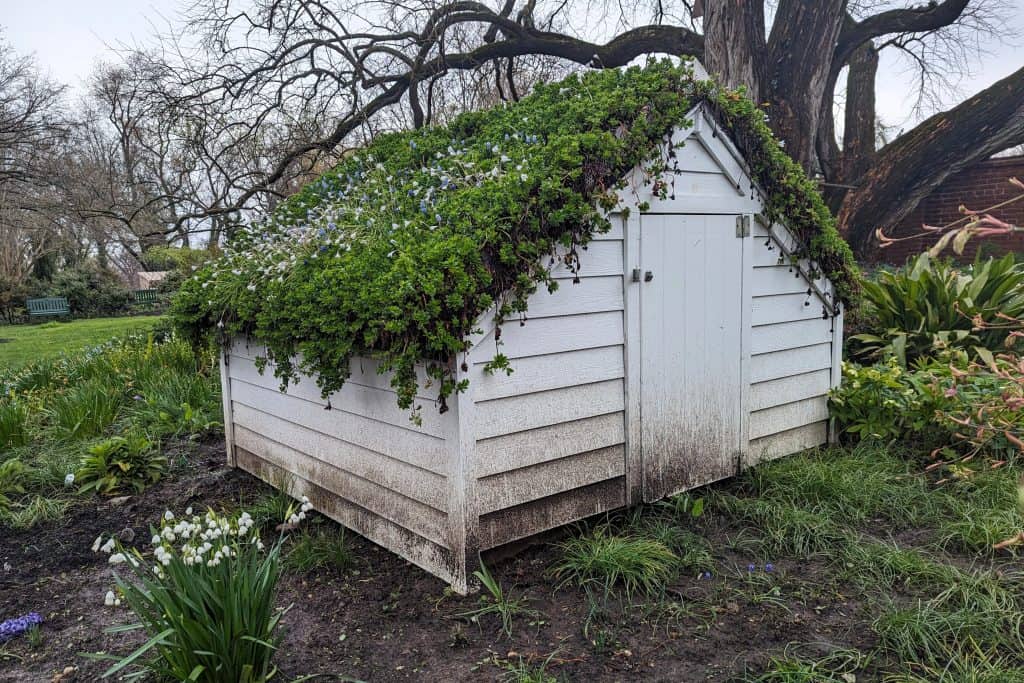
Plus, the American Horticultural Society often hosts garden workshops and plant sales, so you might even pick up some inspiration (or a few plants) for your own garden.
If you love the idea of spring flowers without the crowds of D.C.’s Tidal Basin, River Farm offers a quieter, more intimate place to soak in the season. It’s also just a short drive from Old Town Alexandria.
- Address: 7931 E Boulevard Dr, Alexandria, VA 22308
- Open: Monday to Friday, 10 a.m. – 4 p.m.
Green Spring Gardens (Alexandria, VA)
Minutes from Alexandria, Green Spring Gardens offers a peaceful retreat that feels like a secret garden in the middle of the city. This 31-acre public park is more than just a collection of beautiful landscapes—it’s a living museum designed to inspire home gardeners, nature lovers, and anyone looking for a quiet escape.
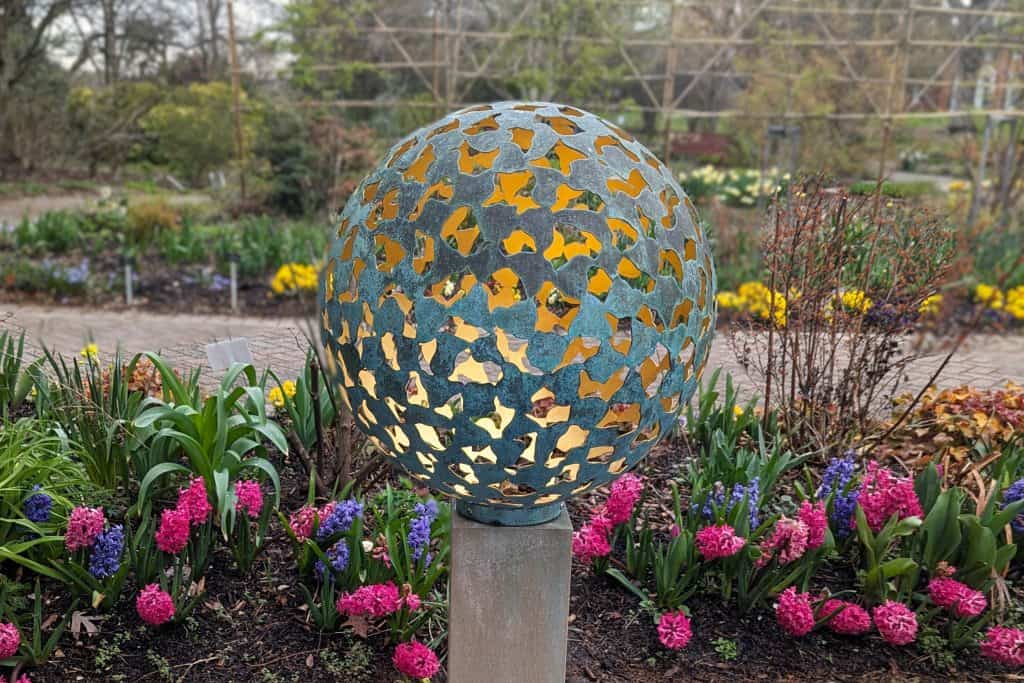
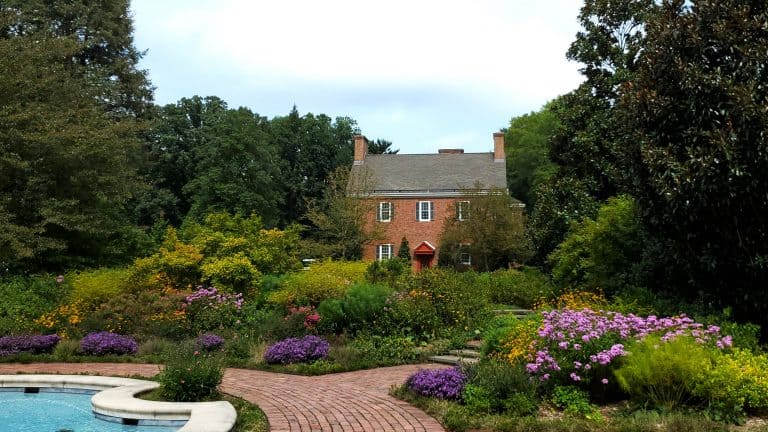
Green Spring Gardens burst into life in spring. The ornamental gardens come alive with tulips, daffodils, hellebore, and azaleas, while the woodland trails and serene water features give life to native wildflowers. The historic 18th-century manor house, framed by flowering trees and vibrant beds, adds to the charm. For those who love structured beauty, the formal demonstration gardens showcase creative landscaping ideas, while the native plant and pollinator gardens highlight the importance of sustainable gardening.
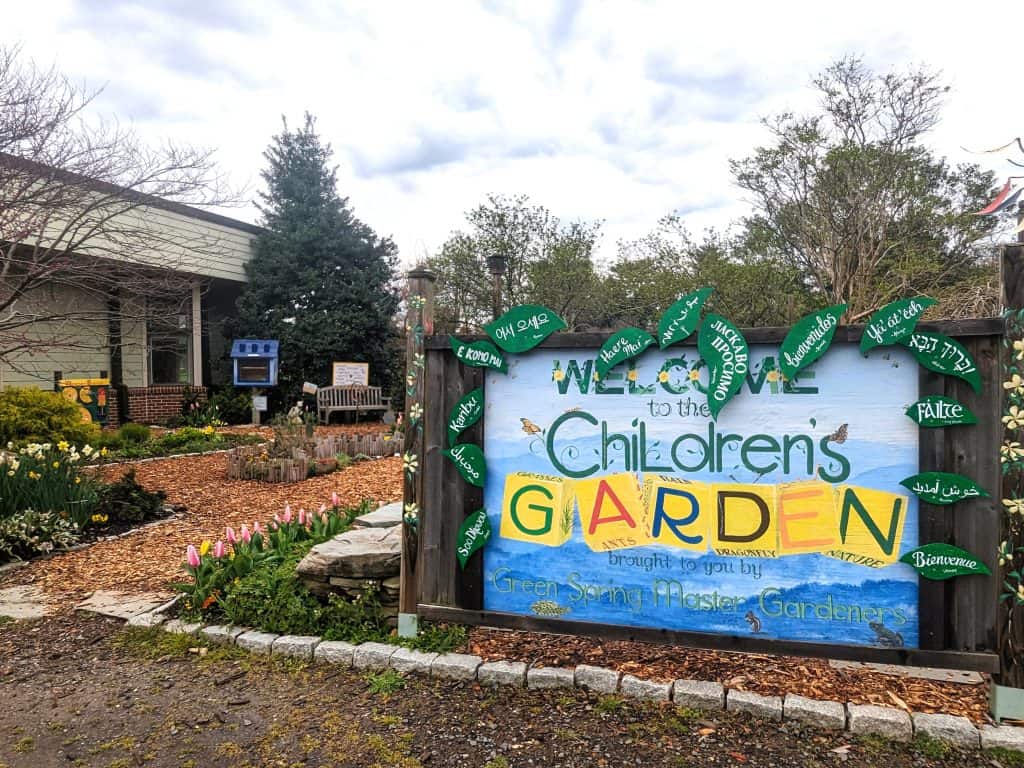
Beyond the blooms, Green Spring is also a place to learn and explore. The on-site horticultural center hosts workshops, plant sales, and seasonal events, making it a favorite for garden enthusiasts. There’s even a tea program at the historic house, where you can relax with a cup of tea while enjoying the garden views.
- Address: 4603 Green Spring Rd, Alexandria, VA
- Open: Monday-Saturday, 9 a.m.- 4:30 p.m.
Meadowlark Botanical Gardens (Vienna, VA)
One of Northern Virginia’s most beautiful spring destinations, Meadowlark Botanical Gardens offers a hidden oasis of vibrant spring blooms, scenic lakes, and peaceful walking trails.
Part of the NOVA Parks system, this 95-acre public garden offers a mix of formal gardens, native woodlands, and flowering meadows, making it a spectacular place to experience the changing seasons. Unlike some public gardens, there is a small entrance fee, but the beauty inside is well worth it.
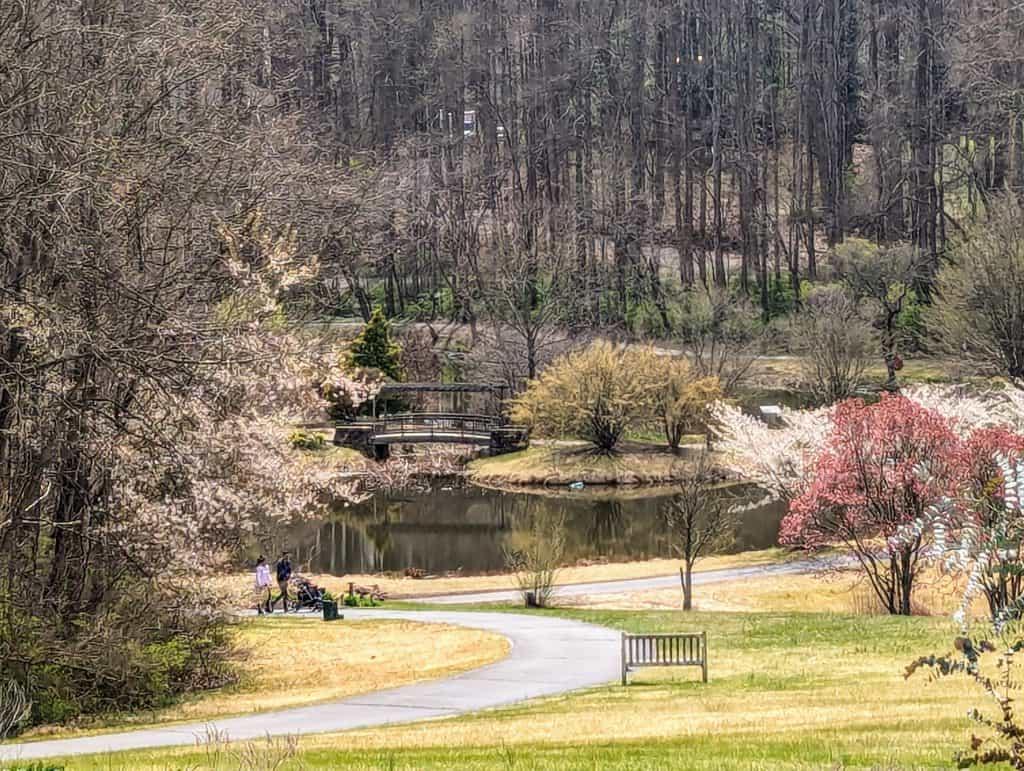
Spring transforms Meadowlark into a painter’s palette of color. Tulips, daffodils, and irises fill the manicured flower beds, while the surrounding woodlands burst with dogwoods, magnolias, and redbuds. Along the winding paths, you’ll find cherry trees draped in pink and white blossoms, offering a more tranquil setting to enjoy these beloved springtime blooms away from the crowds of D.C.
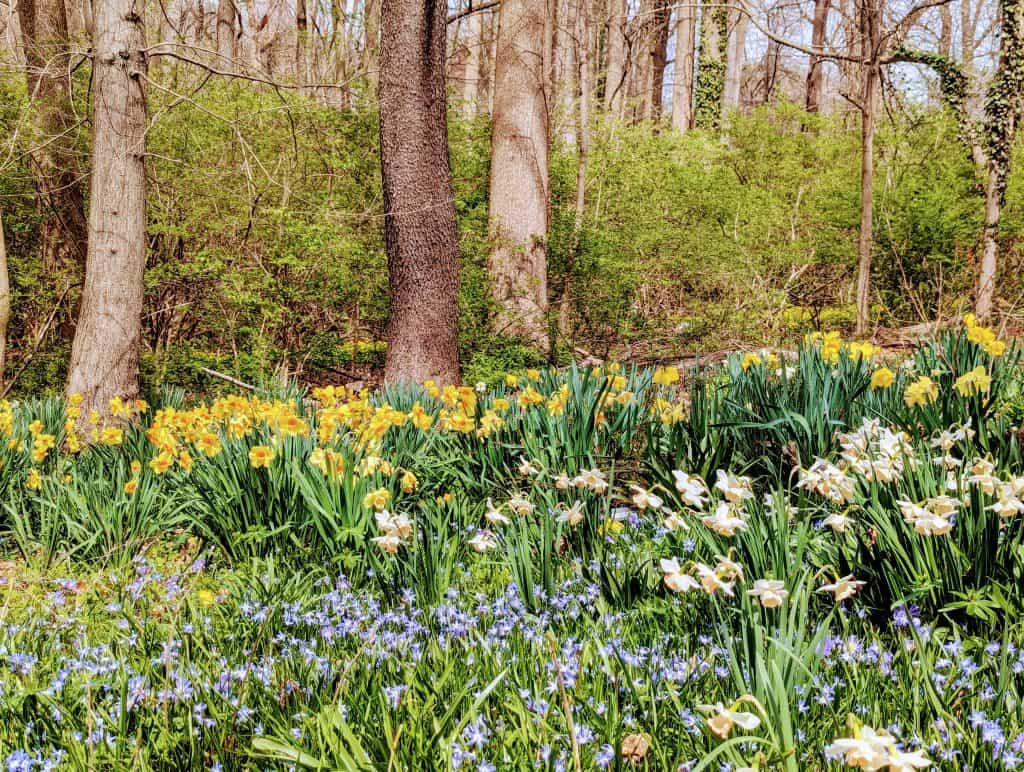
The Azalea and Rhododendron Collection is a must-see in late spring, as bright pinks, reds, and purples light up the gardens. The Perennial Garden also comes alive with waves of seasonal flowers, creating a changing landscape throughout the season.
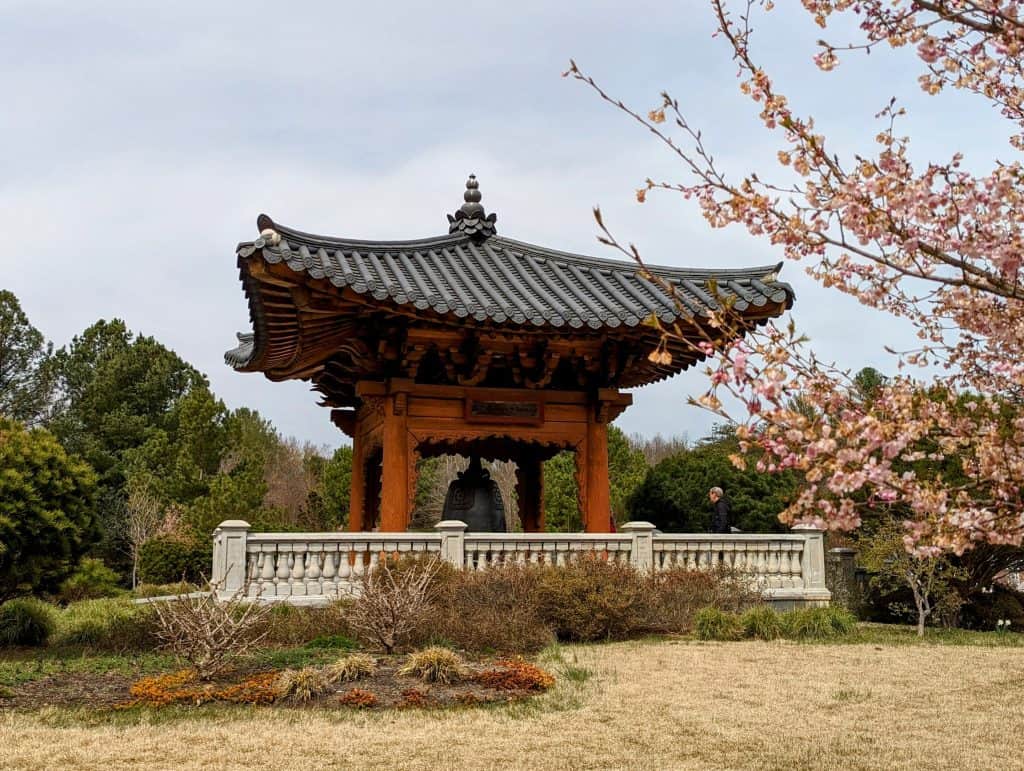
One of the most unique features of Meadowlark is the Korean Bell Garden, the only one of its kind in the Western Hemisphere. At its heart stands a stunning handcrafted Korean bell, gifted from South Korea, housed in a traditional pavilion with intricate woodwork and carvings. Surrounding the bell are Korean-inspired plantings, stone sculptures, and lotus ponds, creating a peaceful, meditative space that blends nature and culture beautifully.
Beyond the blooms, Meadowlark’s three lakes, boardwalks, and shaded woodland trails make it a great place for a leisurely walk, photography, or simply relaxing in nature. Birdwatchers will also love the garden’s mix of open meadows and wooded areas, which attract a variety of wildlife.
- Address:9750 Meadowlark Gardens Ct, Vienna VA
- Hours: Check the website. Hours vary.
Burnside Farms Festival of Spring
If there’s one event that perfectly captures the essence of spring, it’s the Burnside Farms Tulip Festival in Nokesville, Virginia. Set against the rolling countryside, this annual festival is like stepping into a Dutch tulip field, with millions of vibrant tulips and cheerful daffodils stretching as far as the eye can see. It’s easily one of the most colorful and joyful spring experiences in the D.C. area.
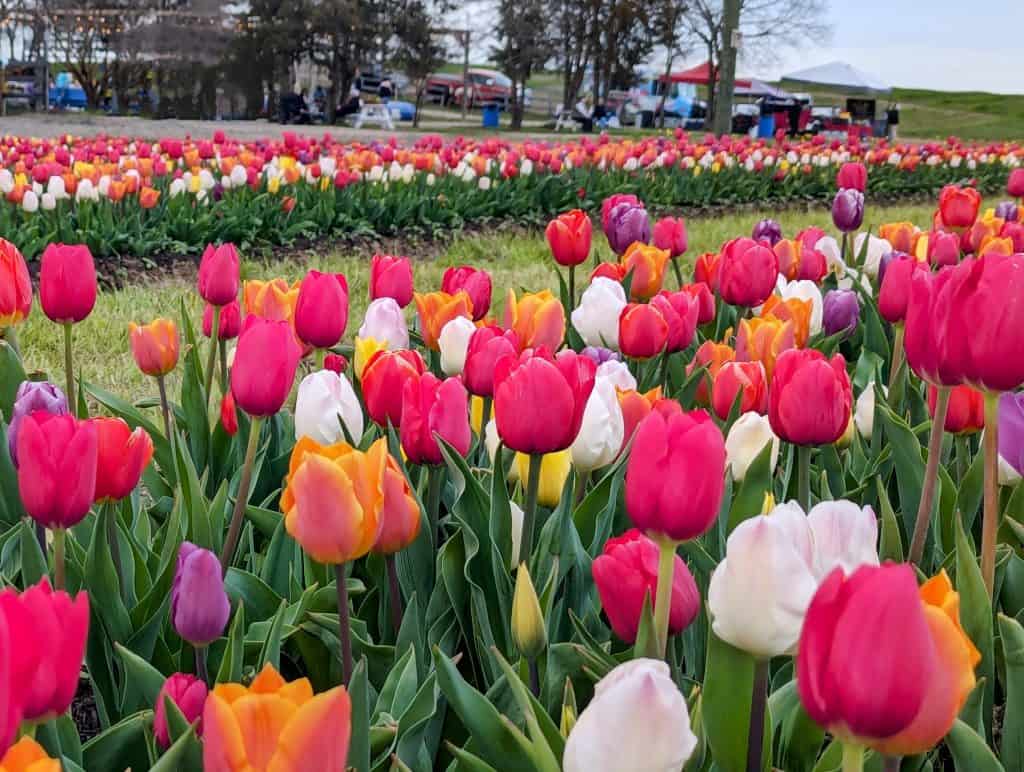
Each year, Burnside Farms plants over 200 varieties of tulips and 30+ varieties of daffodils, creating a breathtaking floral display that peaks between late March and mid-April. Rows of tulips in every shade, yellows, purples, pinks, and even multi-colored varieties—create a picture-perfect backdrop for strolling, photography, and simply soaking in the beauty of spring.
Unlike many public gardens, Burnside Farms offers a “pick-your-own” experience, allowing visitors to gather their own bouquet of fresh tulips straight from the fields. The farm provides baskets and shears, making it easy to create a stunning arrangement to take home.
Beyond the fields of blooms, the festival offers photo ops at charming wooden shoes and Dutch windmill displays, picnic areas where you can relax and take in the scenery, and kids’ activities, including hayrides and a bounce zone.
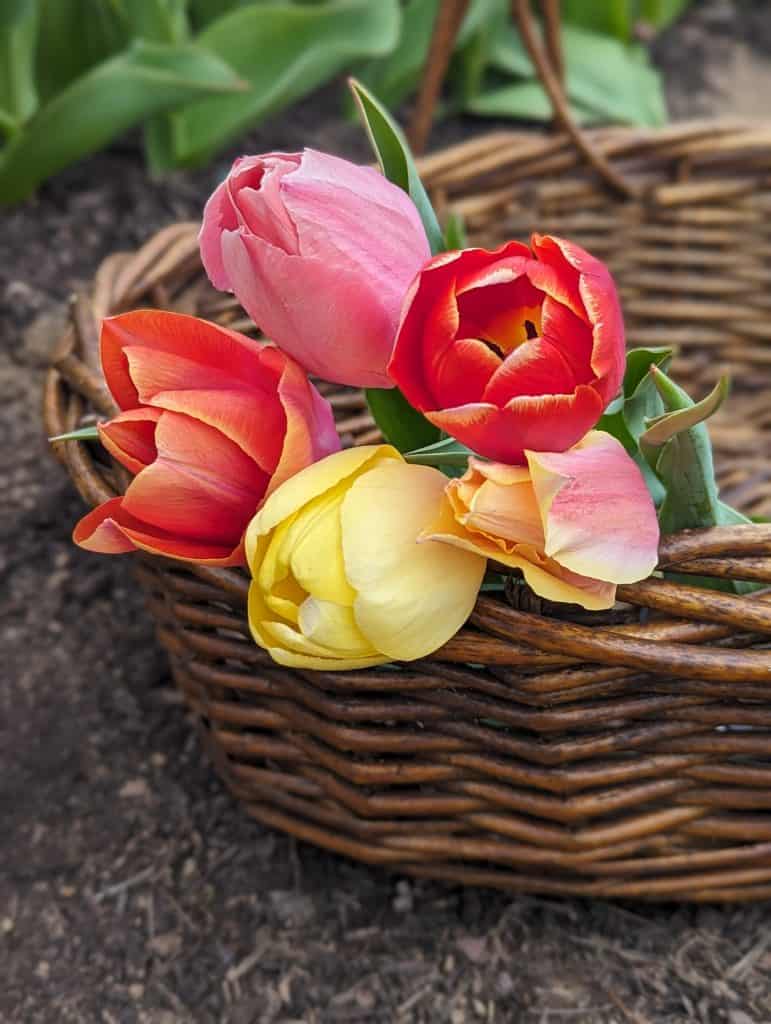
The festival is weather-dependent, as peak bloom varies each year, so checking their website for updates before heading out is a good idea. Tickets are required and often sell out, especially on weekends.
For anyone looking to embrace the spirit of spring fully, Burnside Farms is a must-visit. Whether you’re there for the flowers, the fresh air, or just the chance to bring home a bundle of beautiful tulips, this festival is pure seasonal joy.
- Address: Burnside Farms – 11008 Kettle Run Rd. Nokesville, VA 20181
- Hours: Open Daily 8-Dusk, Early-bird Thursday through Sunday, 7 AM-8 AM
Where to Stay
Hilton Arlington National Landing
The Hilton Arlington National Landing offers the perfect home base for your garden explorations. This stunning fully remodeled hotel in National Landing — home of Amazon HQ2 and the forthcoming Virginia Tech Innovation Campus is conveniently situated for day visits to DC, as well as, exploring the Northern Virginia gardens.

Hilton Arlington National Landing offers city conveniences while being just steps from a charming residential neighborhood loaded with dining options. But there is no need to leave the hotel. The onsite Landing Kitchen and Bar offer three meals a day. If you want grab-and-go options try The Marketplace which serves Starbucks coffee and offers a selection of breakfast, lunch, and snacks.

Like this Post?? Share it NOW!








Thanks for this beautifully written guide, Susan! 🌸 I’ve always associated spring in D.C. solely with cherry blossoms, but your post opened my eyes to so many more peaceful and enchanting spots—especially the Ripley Garden and the Bonsai Museum. I’m definitely adding the National Arboretum to my list for a quieter, nature-filled day. Appreciate the local tips and the poetic descriptions—it really feels like I’ve taken a stroll through D.C. in bloom just reading this!
‘m glad you enjoyed the article. I will be adding a few more gardens to the article, so check back soon.